Gemini’s “Personal Intelligence”: What It Actually Means for You
AI Assistants & Privacy • Jan 14, 2026
Google’s new Personal Intelligence mode lets Gemini use data from
Gmail, Photos, Search history and YouTube (with your permission) to answer
questions that span your whole digital life. Instead of you hunting for that one
flight email, Gemini can find it, combine it with your photos and plan your next trip.
The important part is that this access is opt-in and scoped. You decide
which apps it can see, and you can revoke access or delete history. For builders,
the pattern is powerful: don’t just make smarter chatbots – build assistants that see
the right data at the right time, with clear consent.
Apple x Google: Gemini Is Moving Into Siri’s Neighborhood
Platforms & Distribution • Jan 13, 2026
Apple and Google’s partnership to bring Gemini into a revamped Siri is a distribution
play. Apple keeps control of the device and UX; Google provides modern AI brains. For
everyday users, it means Siri suddenly handles multi-step tasks way better.
For builders, the lesson is about entry points. Your AI probably won’t
ship on every iPhone, but you can still own key entry points like your website,
browser extension or Echo-style desktop app.
Claude Cowork: A Glimpse of Software Built by AI
AI Tools & Dev • Jan 13, 2026
Anthropic’s Claude Cowork is a Mac app that reads and edits files on your
machine, acting like an AI coworker. The twist: engineers say most of it was coded by
Claude Code itself. They used “vibe coding” – spinning up multiple Claude instances to
propose features, write code and fix bugs.
This is a preview of where dev is going: the same model that answers your questions
can also be the junior engineer that helps you ship. Echo AI is heading in that
direction too.
The 2026 Model Race: Choosing a Flagship for Your Stack
Model Strategy • Jan 2026
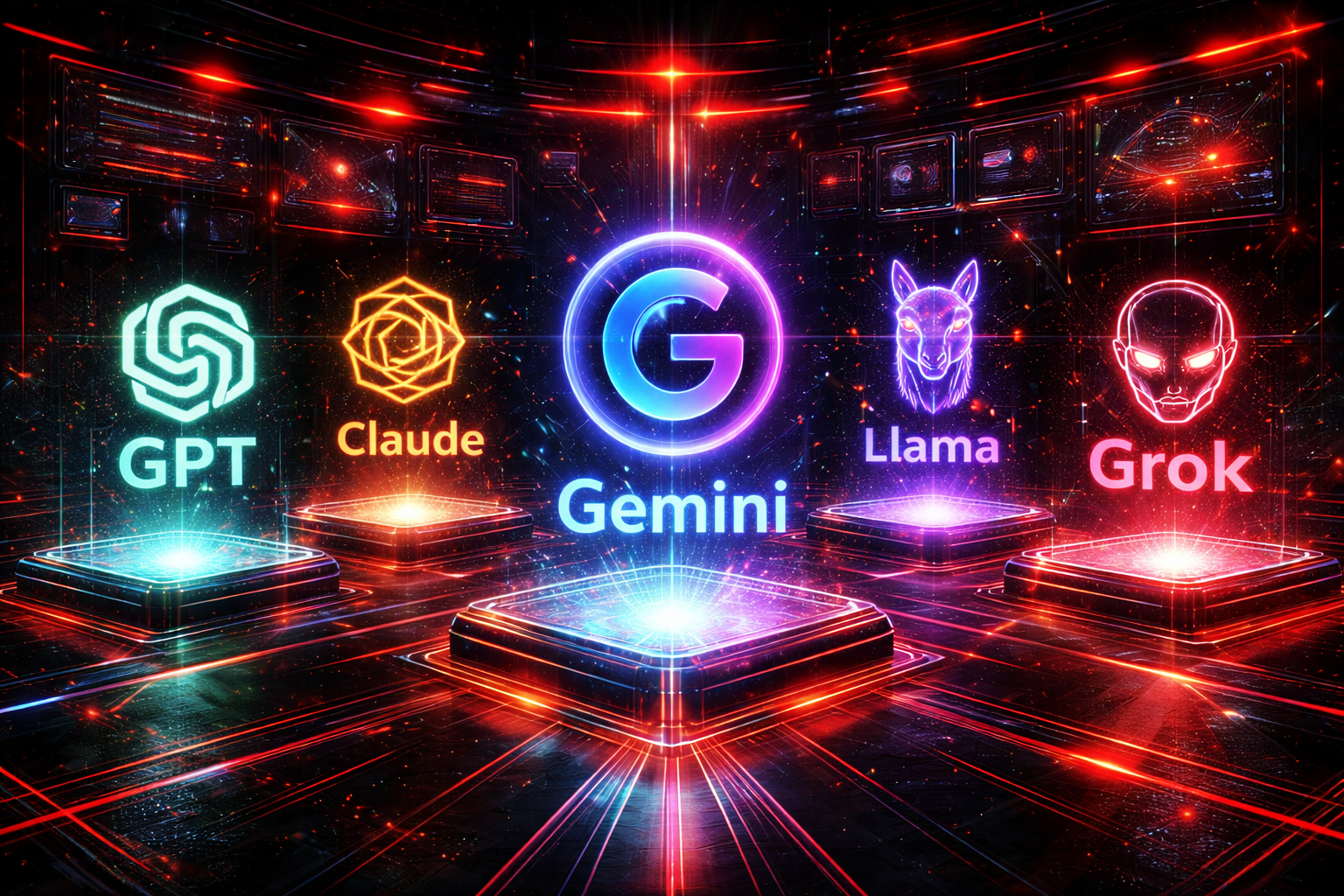
There’s no single “best” model now – just sweet spots. GPT-style models tend to win
on raw reasoning, Claude models are strong on structured workflows and agents,
Gemini shines where Google data/devices are involved, Llama-style models are perfect
when you want to host or fine-tune yourself, and Grok targets realtime X data.
The smart move is to design a multi-model stack. Echo AI mixes a few
flagships with small local models, and we’ll show you how to do the same.
Beginner Roadmap: From Chatting With AI to Actually Using It
Tutorials – Level 1 • Coming Soon
This guide will walk through picking a cloud model, setting up a “second brain”
workspace, and wiring AI into your daily tools without code. The focus: real wins in
the first week, not perfect prompts.
Local LLMs & Backends: Building Echo-Style Setups at Home
Tutorials – Level 2 • Coming Soon
Here we’ll show how to run a local model, connect it to a tiny backend and UI, then
add logging and memory. It’s the blueprint for a privacy-first assistant that runs on
your own hardware.
Business Playbook: Turning AI Into a Real Product
Tutorials – Level 3 • Coming Soon
This playbook covers how to turn “cool bot” energy into a real product: positioning,
pricing, onboarding, analytics and how to talk about AI so customers aren’t confused
or scared off.